George A. Prince - Buffal NY - Melodeon
George A. Prince - Melodeon - Free Reed Organ - Suction Wind Bellows
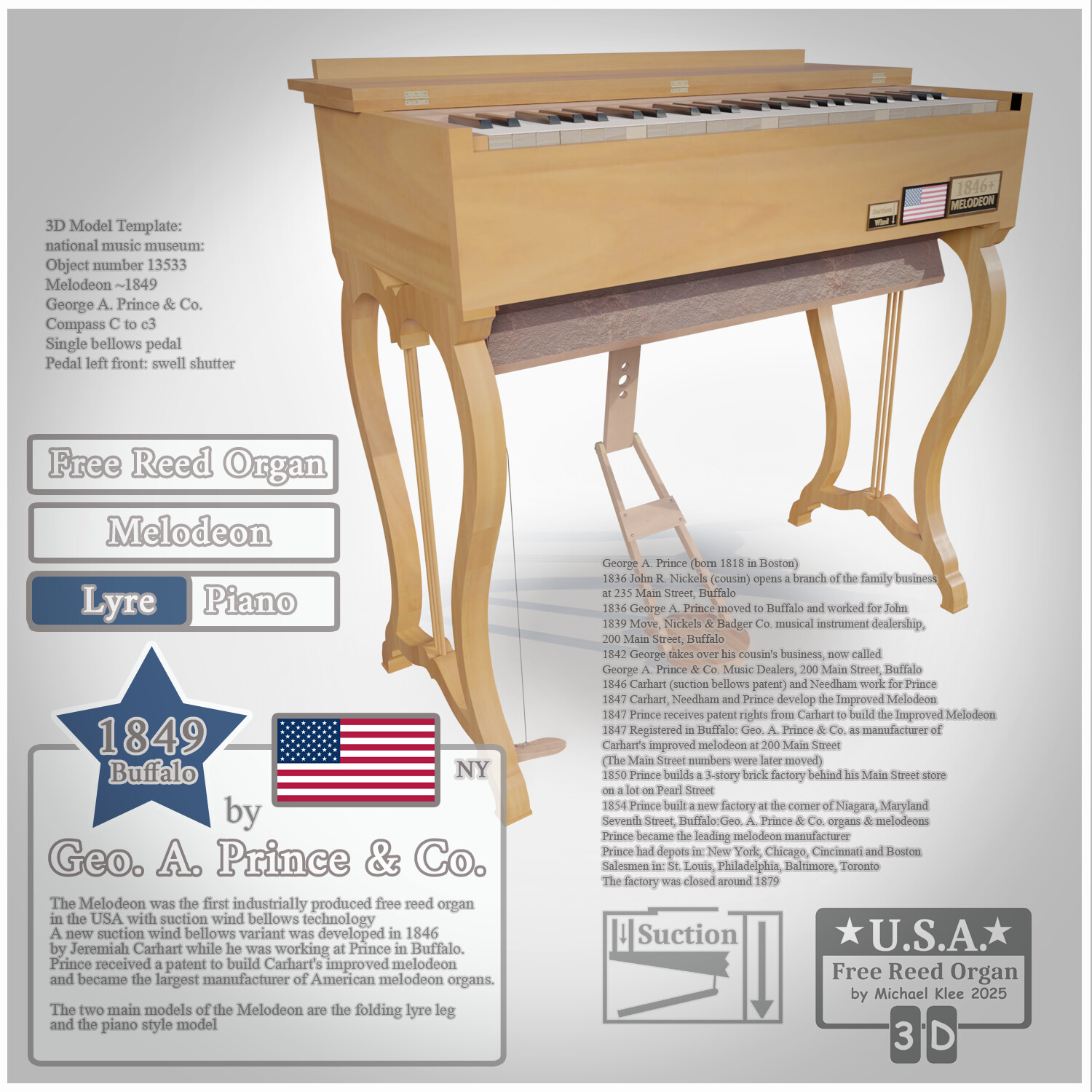
In 1846, Jeremiah Carhart developed and patented suction wind bellows for free reed organs.
In 1847 Jeremiah Carhart, together with George A. Prince and Elias Parkman Needham, developed the Improved Melodeon, the first free reed organ with suction wind bellows in the USA.
Jeremiah Carhart produced Improved Melodeons in New York together with Elias Parkman Needham.
George A. Prince received a license from Jeremiah Carhart and began manufacturing the improved melodeon in Buffalo, New York.
The improved Melodeon was the first suction wind bellows free reed organ in the USA and was built more than 100,000 times.
The peak of the Melodeon was from 1847 to about 1870-80.
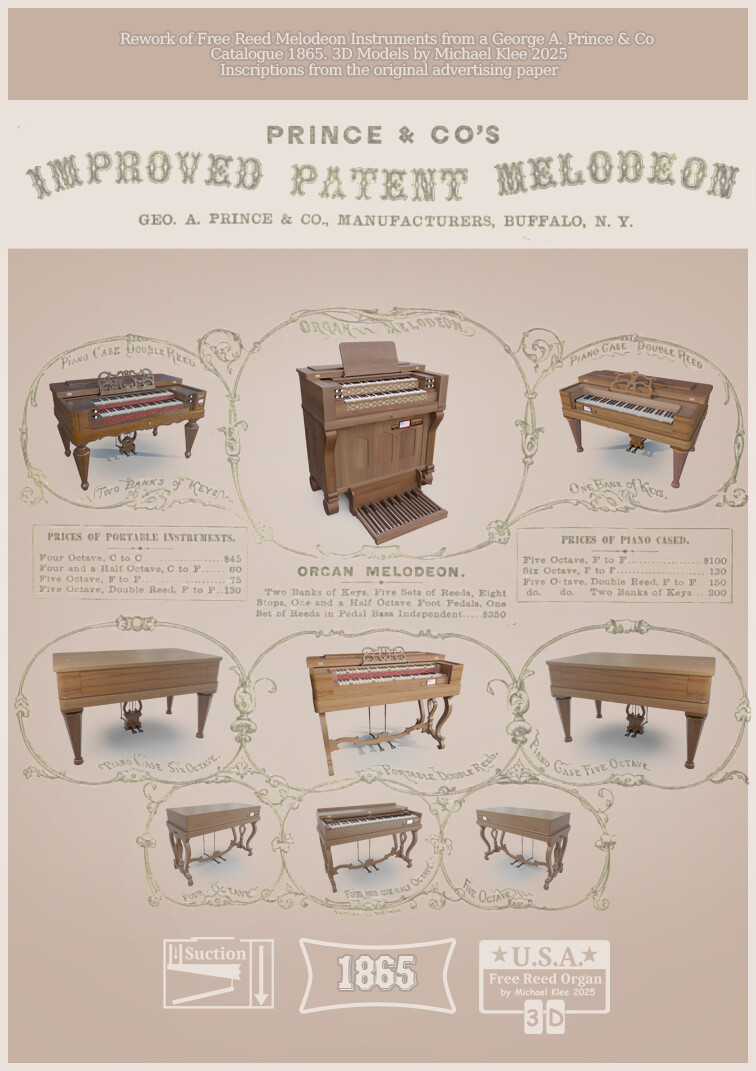
There are two main variants of the Melodeon:
The Lyre Leg or Portable Melodeon and
the Piano Style or Piano Case Melodeon.
George A. Prince built a Melodeon & Organ factory on the corner of Maryland and Niagara Seventh Street in Buffalo in 1854.
The Melodeon is the origin of American free reed organs with suction wind bellows, such as the Cabinet Organ or the Cottage Organ, which were sold in millions thereafter.