Jeremiah Carhart and Elias Parkman Needham - Melodeon
Melodeon - Free Reed - Suction Bellows - Organs
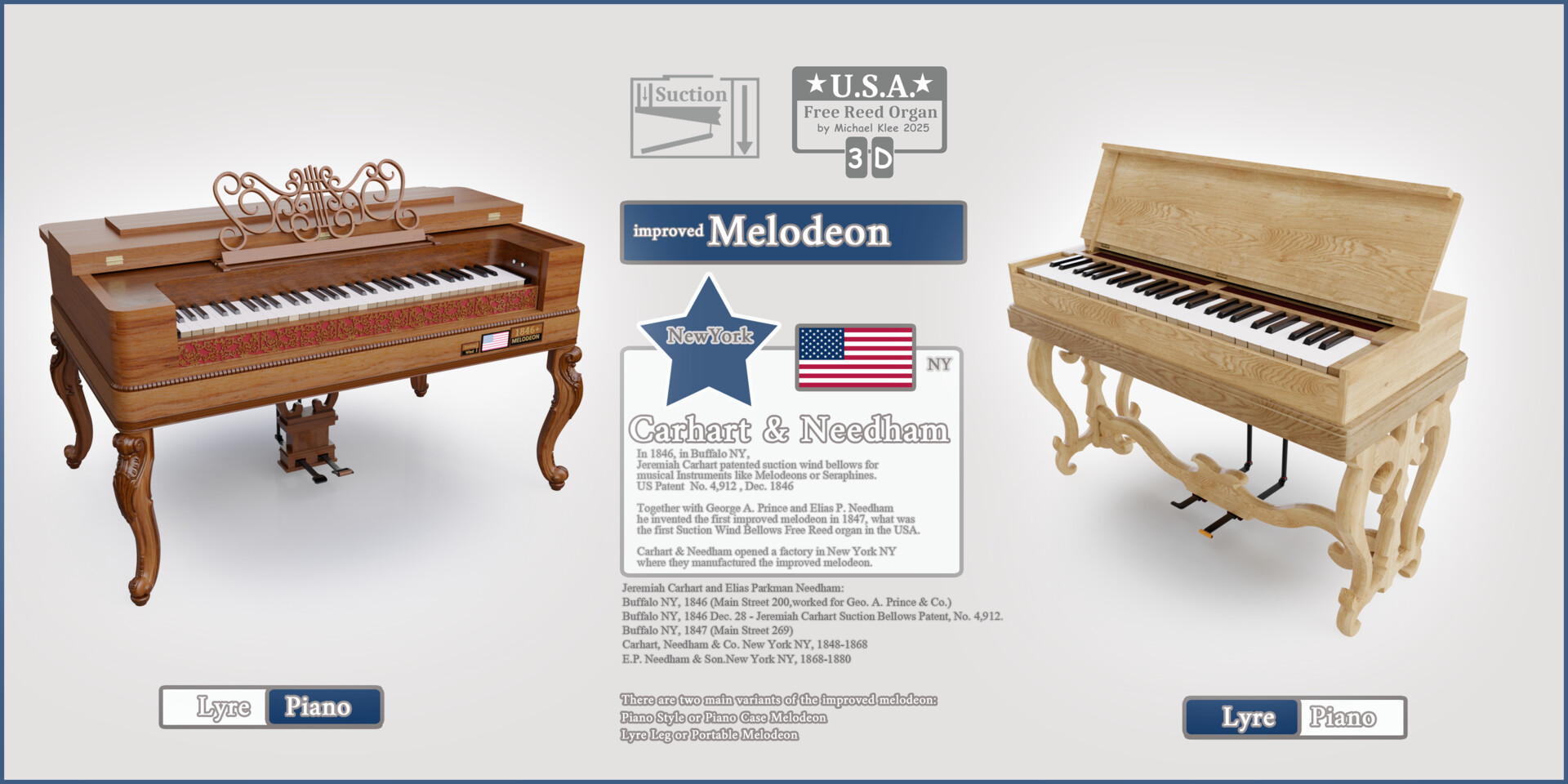
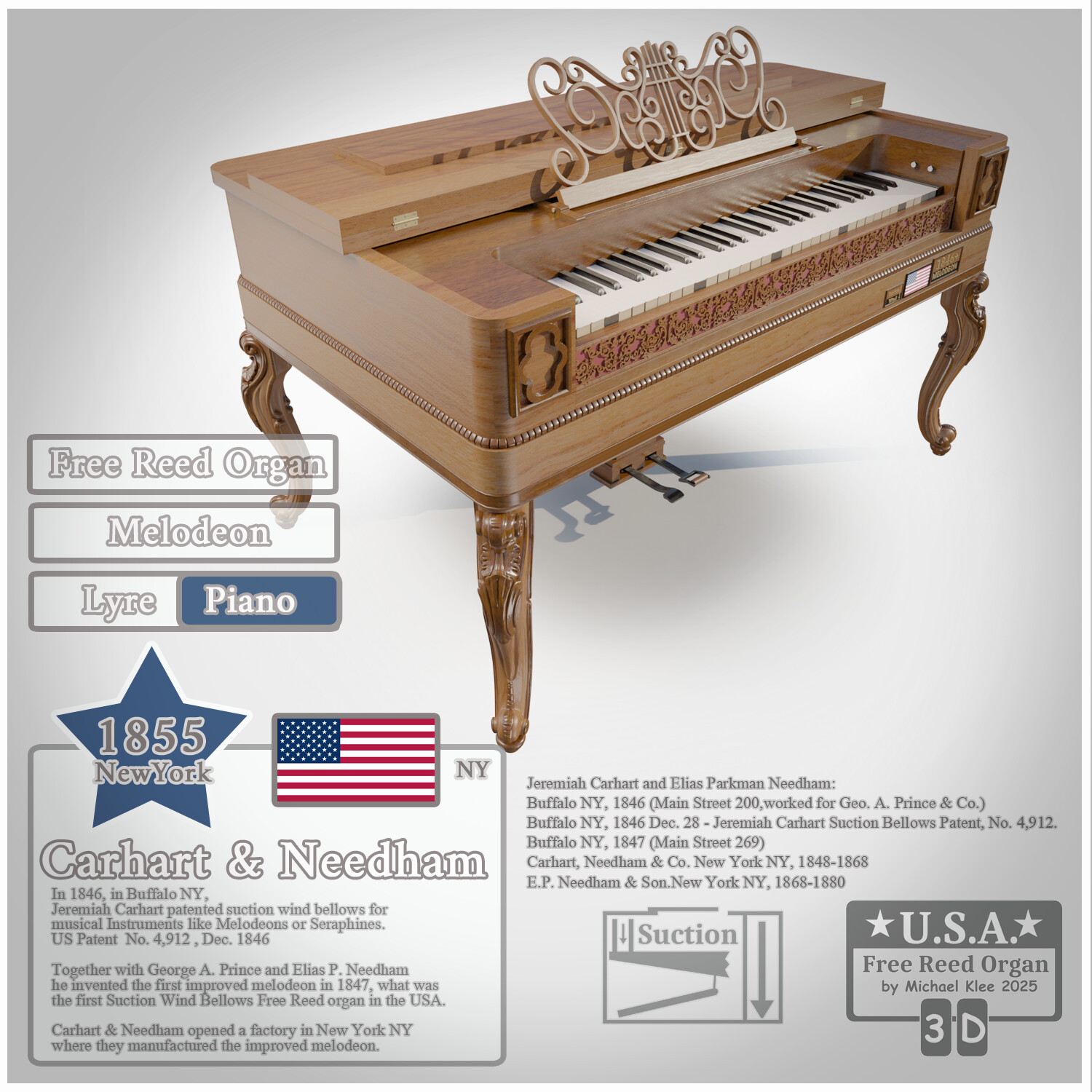
In December 1846 Jeremiah Carhart received a patent in Buffalo NY for (suction wind) bellows which he developed for musical instruments such as the Melodeon or the Seraphine (Melodeon and Seraphine were the first names for free reed organs with pressure wind bellows made in the USA) or instruments with Aeolian (In England and in the USA the free reed technique and the first harmonicas were first called Aeolian) technique.
In 1847, together with George A. Prince and Elias Parkman Needham in Buffalo NY, Carhart developed the first improved melodeon with suction wind bellows.
The improved Melodeon was the first suction wind bellows free reed organ in the USA and was built more than 100,000 times.
The peak of the Melodeon was from 1847 to about 1870-80.
There are two main variants of the Melodeon:
The Lyre Leg or Portable Melodeon and
the Piano Style or Piano Case Melodeon.
Melodeon models with two rows of keyboards or larger cases are more advanced variants that were only produced in small numbers.
The Melodeon is the origin of American free reed organs with suction wind bellows, such as the Cabinet Organ or the Cottage Organ, which were sold in millions thereafter.